NEM vs Third Party Optical Transceivers: Cost, Performance, and Supply Chain Strategy
Posted by Pivotal Optics on Mar 27th 2026
NEM vs Third Party Optical Transceivers: Cost, Performance, and Supply Chain Strategy
Anyone reading this has likely heard the NEM vs third party optics debate. It has circulated in the industry for years, and by now the question is no longer whether third party transceivers work. Operators already know they do.
However, the conversation is gaining renewed attention as networks adopt 400G and higher data rate optics. The increasing complexity of these technologies makes cost, supply chain flexibility, and operational confidence more important than ever.
At Pivotal Optics, our sourcing and engineering process is designed to deliver exactly that. We help operators maintain operational confidence while reducing cost and improving supply chain flexibility.
Performance: Proven in the Real World
There are no performance differences between NEM and third-party optics when modules are engineered properly. Most transceivers, regardless of brand, are built to industry MSA standards, often using components from the same global suppliers.
At Pivotal Optics, some examples of how we validate optics performance include:
- Interoperability testing across supported platforms
- Extended BERT testing to validate performance under real world conditions
- Reliability of DDM/DOM and telemetry reporting to ensure accurate monitoring and management
Pivotal Optics provides direct engineering support to ensure our transceivers are fully compatible with your specific hardware and target applications. This capability allows for real-time collaboration to ensure every transceiver shipped meets your exact network requirements. We understand that network turn ups and configuration changes are time critical; Pivotal is committed to providing up front design support to ensure the most optimal optics for your solution. We provide technical expertise exactly when you need it and always free.
This level of flexibility is typically not available through NEM supplied optics.
Cost and Supply Chain: Why Pivotal Optics Is your #1 Choice
NEM optics are often priced as part of a broader revenue model. Transceiver margins help offset the cost of hardware, software, and support, while vendor lock reinforces demand within the NEM ecosystem.
Pivotal Optics focuses on the transceiver itself, delivering the engineering, validation, and support operators need to deploy optics with confidence.
Supply chain flexibility also plays a major role. NEMs often rely on a small set of preferred manufacturing partners. Pivotal Optics maintains relationships with multiple global foundries, which helps reduce lead times, improve component availability, and give operators greater flexibility as their networks grow.
|
Metric |
NEM Transceivers |
Pivotal Optics |
|
Pricing |
High (Bundled with support/licensing) |
Competitive (Hardware-focused) |
|
Lead Times |
Often long (Fixed supply chain) |
Flexible (Multiple global foundries) |
|
Vendor Lock-in |
High (Proprietary coding) |
Low (Multi NEM compatibility) |
|
Reliability |
"Gold Standard" perception |
Equivalent (MSA Standard + BERT testing) |
Risk: Reliability and Operational Confidence
A good partner shows reliability through real world metrics:
- DOA (Dead on Arrival) rates
- AFR (Annualized Failure Rate)
At Pivotal Optics, our metrics consistently meet or exceed industry averages. Combined with thorough testing, this gives operators confidence that optics will perform reliably in production.
The Role of Pivotal Optics in Modern Networks
Pivotal Optics provides a combination of advantages:
- Lower cost without sacrificing performance
- Greater supply chain flexibility
- Carrier grade reliability
- First Class Engineering Support
With proper validation, operators can use Pivotal Optics transceivers in core, edge, or feature sensitive paths without compromise.
Conclusion
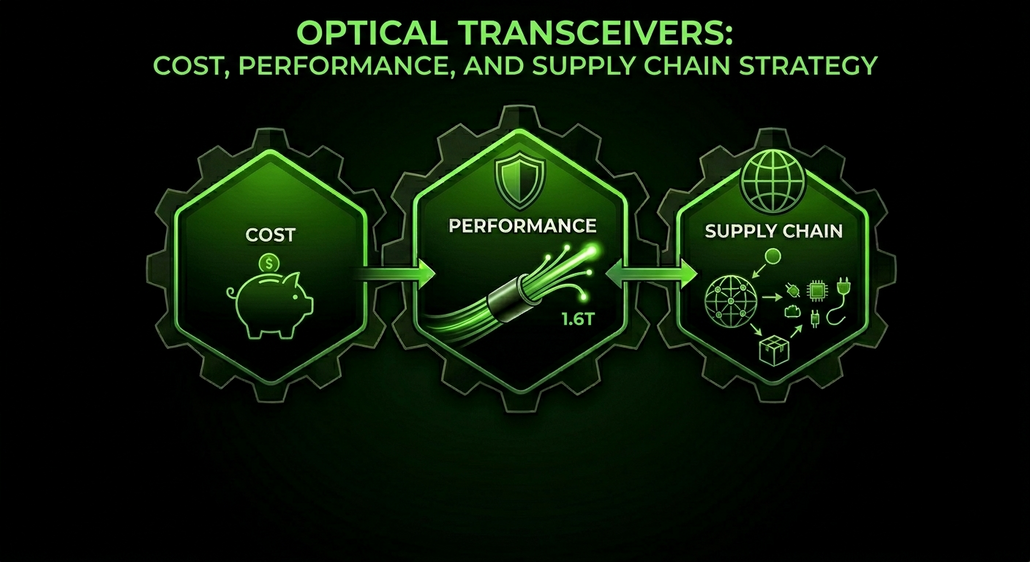
The debate is no longer about whether third party optics work. It is about how operators achieve the best combination of cost, performance, and operational confidence.
At Pivotal Optics, we deliver optical solutions that combine rigorous validation, platform compatibility, and supply chain resilience. Our approach allows operators to deploy networks with confidence, reduce cost, and maintain flexibility without sacrificing reliability or performance.