Posted by Pivotal Optics on Mar 27th 2026
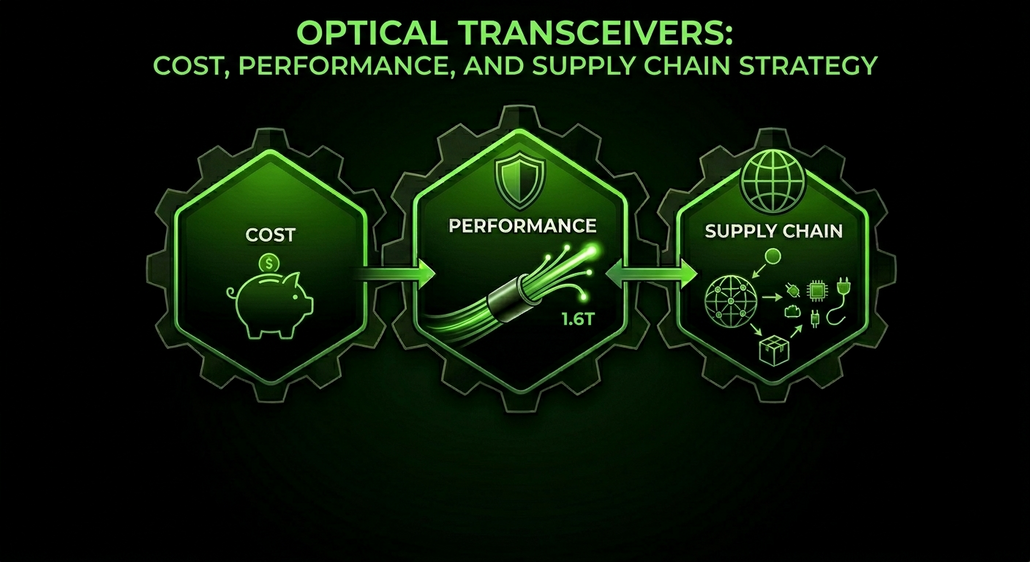
NEM vs Third Party Optical Transceivers: Cost, Performance, and Supply Chain Strategy
Anyone reading this has likely heard the NEM vs third party optics debate. It has circulated in the industry for years, and by now the question is no longer whether third party transceivers work. Operators already know they do.
However, the conversation is gaining renewed attention as networks adopt 400G and higher data rate optics. The increasing complexity of… Read more

Posted by Pivotal Optics on Mar 10th 2026
In carrier and enterprise networks, a warranty is not marketing language, it is contractual risk protection tied directly to uptime and operational continuity.
Yet a persistent myth continues to surface in procurement discussions: deploying third party optical transceivers automatically voids NEM hardware warranties or support agreements.
Let’s address this clearly:
Pivotal’s third-party optical transceivers do not void NEM hardware w… Read more

Feb 25th 2026
In the evolution of Passive Optical Networks, or PON, the spotlight naturally falls on the stars of the show which is the active gear. The Optical Line Terminals and high speed transceivers represent the cutting edge of data rates and processing power.
However, the true strategic foundation of your network lies in the Optical Distribution Network. While active gear captures the headlines, the passive components, specifically Coexistence Modules (… Read more

Posted by Pivotal Optics on Feb 17th 2026
400G and 800G deployments are here, but they bring a new dilemma for network architects: QSFP-DD or OSFP?
Because this is the most common inquiry we receive, we are answering it publicly. Below, we break down the critical differences to help you decide which form factor aligns with your network goals.
"Which form factor offers the best backward compatibility?"
The Short Answer: QSFP-DD.
If your primary goal is to upgrade brownfield environments w… Read more